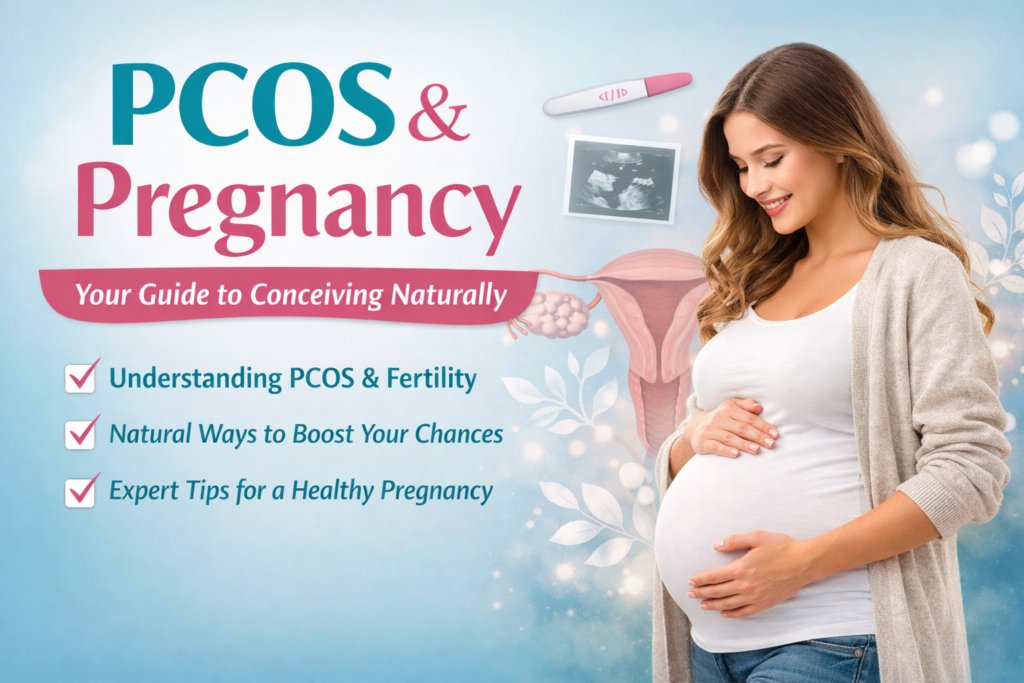
Polycystic ovary syndrome (PCOS) is one of the most common hormonal conditions affecting people of reproductive age. Because PCOS can interfere with ovulation and menstrual cycles, many women wonder whether they can get pregnant with PCOS.
The good news is that PCOS does not mean pregnancy is impossible. Although some people with PCOS may take longer to conceive because of irregular or absent ovulation, many conceive naturally or with medical support.
If you are trying to become pregnant with PCOS, understanding how the condition affects fertility—and knowing which treatment and lifestyle strategies may help—can make the journey easier to navigate.
What is PCOS and How Does It Affect Pregnancy?
PCOS (Polycystic Ovary Syndrome) is a hormonal and metabolic condition that can affect ovulation, menstrual cycles, androgen levels, and metabolism.
Common features of PCOS include:
- Irregular or infrequent periods
- Irregular or absent ovulation
- Higher-than-usual androgen levels
- Acne or increased facial/body hair
- Weight changes or difficulty managing weight
- Insulin resistance in some people
- Polycystic-appearing ovaries on ultrasound in some cases
Despite its name, having ovarian cysts is not required to have PCOS. The diagnosis is usually based on a combination of symptoms, medical history, examination, blood tests, and sometimes ultrasound.
PCOS does not mean pregnancy is impossible
How Does PCOS Affect Fertility?
The main reason PCOS can make conception more difficult is irregular ovulation.
During a typical menstrual cycle, an egg matures and is released from an ovary. This process is called ovulation. Pregnancy can occur when sperm fertilizes the released egg.
With PCOS, hormonal changes can interfere with the development and release of an egg. Some people ovulate only occasionally, while others may not ovulate regularly at all.
This means there may be fewer opportunities to conceive during a year.
However, PCOS does not automatically mean infertility. If ovulation can be restored or supported, the chances of conception can improve.
Can You Get Pregnant Naturally With PCOS?
Yes. Many people with PCOS become pregnant without fertility treatment.
Your chances of conceiving naturally depend on several factors, including:
- Whether and how often you ovulate
- Age
- Sperm health of your partner
- Fallopian tube health
- Other reproductive or medical conditions
- Lifestyle and metabolic health
- How long you have been trying to conceive
If your periods are irregular, it can be harder to predict when ovulation occurs. Tracking your cycle and discussing ovulation with a healthcare professional can therefore be particularly useful.
Medical Treatments for PCOS-Related Infertility
If irregular ovulation is making pregnancy difficult, fertility treatment can help.
A healthcare professional may first evaluate ovulation and check for other factors that could affect fertility.
What Tests May Be Done?
Your healthcare professional may recommend tests to understand why conception is difficult.
Depending on your situation, evaluation may include:
- Medical and menstrual history
- Physical examination
- Hormone testing
- Blood glucose or metabolic testing
- Pelvic ultrasound
- Ovulation assessment
- Semen analysis for your partner
- Evaluation of the fallopian tubes when appropriate
Can PCOS Affect the Baby?
Most people with PCOS who become pregnant go on to have healthy pregnancies and babies.
However, because PCOS is associated with certain pregnancy risks, appropriate prenatal monitoring is important. Your doctor or obstetrician can help identify and manage potential complications early.
Common Myths About PCOS and Pregnancy
Myth 1: "PCOS means I can't get pregnant."
Not true. PCOS can make ovulation irregular, but many people with PCOS conceive naturally or with fertility treatment.
Myth 2: "I need to lose a lot of weight before I can get pregnant."
Not necessarily. Weight management can be beneficial for some people, but fertility care should be individualized. People with PCOS can have fertility problems at different body sizes.
Myth 3: "Having regular periods means I definitely ovulate."
Not always. Regular bleeding generally makes ovulation more likely, but it does not guarantee that ovulation occurs in every cycle.
Myth 4: "IVF is the only option for PCOS-related infertility."
No. If irregular ovulation is the primary fertility problem, treatments designed to induce ovulation may be considered before IVF.
Medical note: This article is for general educational purposes and does not replace personalized medical advice. If you are pregnant, trying to conceive, or taking medication for PCOS, discuss your individual situation with a qualified healthcare professional.